How to Design a Romance Book Cover
A romance cover signals warmth and emotion: a soft or saturated palette (blush, gold, deep jewel tones), a script or elegant serif title paired with a clean small-caps author line, and imagery that promises the fantasy — an illustrated couple, a symbolic object, or pure mood. The biggest current trend is illustrated, typographic covers for contemporary romance; match the style to your subgenre.
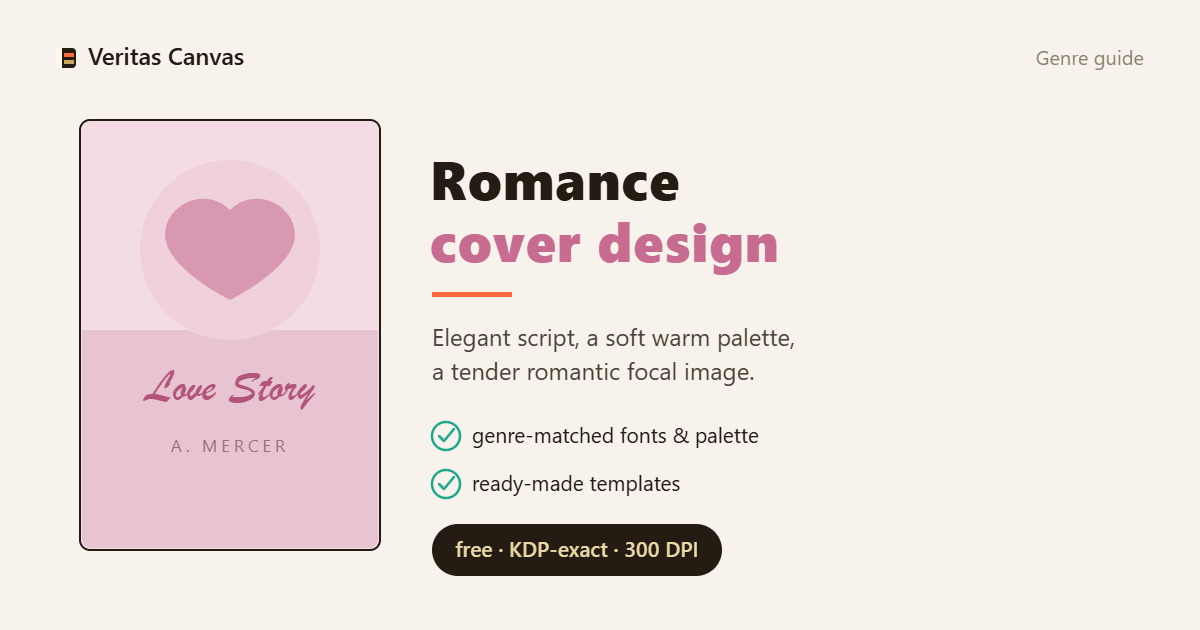
The illustrated vs photographic trend
This is the first choice that sets your shelf today. Contemporary / rom-com: bright, illustrated, typographic covers — the best-selling look of recent years. Historical and dark romance: photographic, moody, dramatic light. The wrong style files your book on the wrong shelf; a cheerful illustrated cover misleads readers about a dark romance. Decide your subgenre first, then pick the style.
Romance palettes: warmth and jewel tones
Color announces the heat level before the cover is opened. Sweet/clean romance wants blush, cream and gold; dark romance wants deep red, purple and black; rom-com smiles in bright, saturated hues. The common thread is warmth — a cold, clinical palette feels foreign on the romance shelf. A single accent (a gold-foil feel, a rose red) turns simplicity into richness.
Typography: script meets serif
The title carries the romance: a flowing script or an elegant serif (Great Vibes, Cormorant), balanced by a plain sans or small caps for the author and subtitle. Avoid heavy condensed faces — that's the thriller shelf's job. A common, lovely touch: set the last word of the title in a contrasting accent or handwritten face — the eye lands there.
Subgenre signals: sweet, contemporary, dark
The cover promises the book's heat level. Sweet/clean: soft, illustrated, light. Contemporary/rom-com: bold type + bright color, playful. Dark romance: black, red, ornate, a spark of danger. Readers should sense what kind of love to expect from the cover — signal it wrong and you draw the wrong reader.
Imagery: promise, don't show everything
A couple (illustrated or silhouette), a symbolic object (a rose, a ring, a hand), or pure mood — all three work. Restraint reads as class; leave room for imagination. A cover that tells everything promises nothing; land the feeling at a glance and let the reader fill in the rest.